by Joseph Sternberg
Federal expenditures have increased during President Obama's administration from a previous level of about 20% up to 25% of the Gross Domestic Product (GDP). This is an increase of $780 billion dollars a year. How is such an increase going to be paid for?
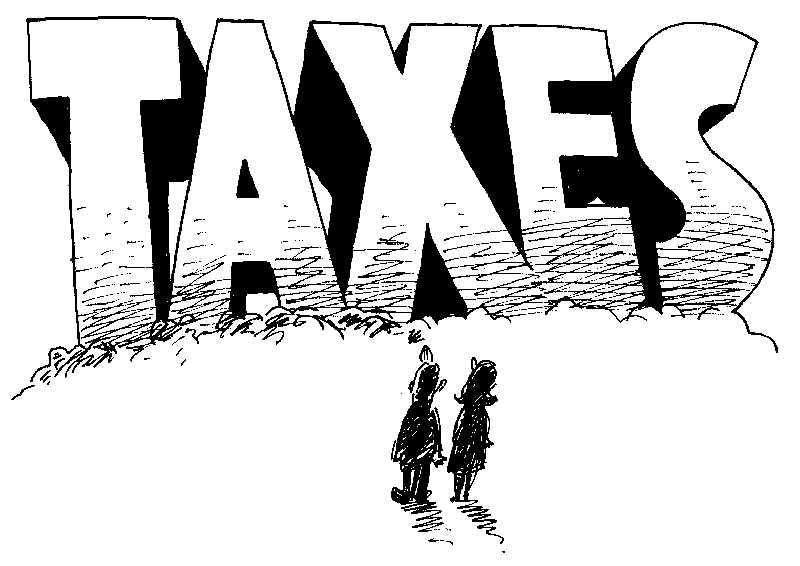
Recently, President Obama submitted a budget for 2013 that calls for an increase of government expenditures, not a reduction, with a projected deficit of close to a trillion dollars. It is clear beyond any doubt that Obama is opposed to solving the debt problem by reducing expenditures. So what is the alternative?
Obama seeks to create the belief that if the rich paid their "fair share," there wouldn't be a deficit problem.There is a case to be made that the wealthy are not paying their "fair share." Over a long period of time, with both Republican and Democratic political support, the tax rate schedule has been progressive, calling for the wealthy to pay a larger percentage of their income in income taxes than less wealthy taxpayers. But because of all sorts of provisions and loopholes that have been written into the tax code, tax payments by the wealthy fall well below what is called for by the tax rate schedule. Obama proposes to fix this by imposing a millionaires tax of 30% so that wealthy people pay their "fair share." It is estimated that this would bring in an additional $40 billion dollars a year in revenue. That still leaves $740 billion in increased expenditures.
Obama says his objective is to protect the middle class from an increase in taxes while addressing the deficit problem. He has proposed to decrease the deficit by allowing the Bush tax cuts enacted in 2001 and 2003 to expire, claiming that these tax cuts were tax cuts for the wealthy and violated the "fair share" principle. The IRS tax data shows that this claim is false. According to the IRS tax data for 2000 and 2004, the income taxes paid on the total AGI (Adjusted Gross Income) for all taxpayers fell from 15.26% in 2000 to 12.10% in 2004, a reduction of 21%. At the same time, the percentage of taxes paid on AGI by the top 1% of taxpayers only fell by 15%. So if the Bush tax laws are allowed to expire, the middle class will have their taxes raised more than the top 1% and the bulk of the increase in taxes will be paid by the middle class.
Since the total amount collected in federal income taxes in 2010 was approximately $900 billion dollars, an increase of 21% by canceling the Bush tax cuts would add an estimated $188 billion to federal revenue. Adding together $40 billion and $188 billion still leaves $552 billion in expenditures not covered by tax revenue. For political reasons (not to mention economic reasons) Obama isn't seeking an across the board increase in income tax rates to cover this deficit.
Well there is always a Value Added Tax (VAT) to be considered. In the European Union the VAT tax produces about 25% of the total tax revenue. Overwhelmingly, the middle class pays for this expenditure tax since the middle class spends a much higher fraction of its income for consumption than the upper 1%. Federal revenue in 2010 was 2.16 trillion dollars. A VAT tax designed to add revenue equal to 25% of this amount would provide $540 billion dollars covering the remaining deficit of $552 billion.
So the inevitable conclusion is that the increase in expenditures from 20% of GDP to 25% of GDP by Obama would have to be mostly paid for by the middle class. Trying to conceal this by class warfare in unconscionable.
____
Joseph Sternberg
Retired Professor of Physics
Naval Postgraduate School, Monterey, CA
A blog to explain the free-market, center-right point of view
to those who don't share this outlook.
Showing posts with label taxes. Show all posts
Friday, March 16, 2012
Thursday, January 12, 2012
Hypocrite Hijinks... and Dead People Voting
by Libby Sternberg
Warren Buffett, the Oracle Hypocrite of Omaha, is at it again. The Berkshire-Hathaway tax evader (see the company's annual report for info on how much the IRS says they owe, or go to this blog post for more), who wants other people to pay more taxes because he's so torn up about his own low tax rate, can't seem to find the U.S. Treasury address to which he could voluntarily send his millions. (Hint: we've posted it here.)
So he's come up with a new plan--sort of a "matching grant" program. For every dollar a Republican congressman contributes to lower the debt, he'll contribute a buck. And he'll put in even more for every one that Republican Minority Leader Mitch McConnell throws in the kitty.
Warren, Warren, Warren...you don't need to set up ridiculous plans like this one. As pointed out above, you can send your money -- as much as you like, unfettered by silly gamesmanship -- to the U.S. Treasury.
Oh, all right. Maybe you're too busy to go to that link above. Here's the address for your charitable giving to the U.S. Treasury:
Here's a link to how you do the deed: http://www.fms.treas.gov/faq/moretopics_gifts.html
But Republicans aren't keen on raising taxes to lower the debt and deficit. They understand that a) more taxes will just mean more spending; and b) government-funded programs don't always achieve the best results anyway.
Hmm...where have I heard that before? Oh, yes, from Mr. Buffett himself, explaining his huge donations to his family's own foundations:
So, keep on giving, Warr (you don't mind if I call you that, do you?)--to both charitable foundations and the government. Just stop asking others who haven't made it to your gajillionaire status yet to pay more, too.
***
On to Voter I.D. laws....liberal groups, mostly funded by George Soros, have been having a field day lately getting their mailing list members in a stew over so-called voter-suppressing Voter I.D. laws now in place or being considered in numerous states, now that the U.S. Supreme Court has ruled such laws as legal (a 6-3 decision with liberal justice John Paul Stevens helping explain why Voter I.D. is not voter suppression).
This is a tactic of both left and right -- to get believers all het up -- to raise funds and grow the mailing list, on an issue that could resonate with the base when presented a certain way but which probably won't be going anywhere any time soon.
In other words, there's a good chance that more and more people will continue to support Voter I.D. laws (polls show majorities already do) and, if properly crafted, the laws will continue to be upheld in the courts. But in the meantime, groups like Moveon.org, TruthOut, Signon.org (all offshoots of the same liberal organization tree) will rake in dough, gin up outrage and snag new subscribers.
Is voter fraud a big issue, though? These liberal groups claim it's not. That would come as a surprise to some Troy, NY officials who decided to plead guilty last year to filling out fraudulent absentee ballot forms, or to 11 conspirators in Alabama in 2008 for voter fraud or to Indiana's Democratic Chairman who resigned amidst charges of voter fraud during the Democratic primary in 2008. I could go on...
One of the easiest ways to commit voter fraud is to request the ballot of a dead person. There are a lot of dead people still on voter lists because it often takes a while for these names to be stricken from public records. Local town clerks usually can't just take it upon themselves to remove these names after seeing an obituary or even attending a funeral. There has to be an official communication affirming the death.
Conservative filmmaker James O'Keefe is now out with a video showing deceased persons' ballots being handed out quite cheerfully to fake voters in the New Hampshire primary (NH doesn't require Voter I.D.).
I know liberals and even moderates don't give much credence to O'Keefe, but he's right--you can easily obtain ballots for deceased persons in most jurisdictions.
If you want to make every vote count, you have to ensure that fraudulent votes are not counted. Viva Voter I.D.!
***
Libby Sternberg is a novelist.
![]() |
| Poor fellow...still searching for that US Treasury address... |
So he's come up with a new plan--sort of a "matching grant" program. For every dollar a Republican congressman contributes to lower the debt, he'll contribute a buck. And he'll put in even more for every one that Republican Minority Leader Mitch McConnell throws in the kitty.
Warren, Warren, Warren...you don't need to set up ridiculous plans like this one. As pointed out above, you can send your money -- as much as you like, unfettered by silly gamesmanship -- to the U.S. Treasury.
Oh, all right. Maybe you're too busy to go to that link above. Here's the address for your charitable giving to the U.S. Treasury:
Gifts to the United States
U.S. Department of the Treasury
Credit Accounting Branch
3700 East-West Highway, Room 622D
Hyattsville, MD 20782
Here's a link to how you do the deed: http://www.fms.treas.gov/faq/moretopics_gifts.html
But Republicans aren't keen on raising taxes to lower the debt and deficit. They understand that a) more taxes will just mean more spending; and b) government-funded programs don't always achieve the best results anyway.
Hmm...where have I heard that before? Oh, yes, from Mr. Buffett himself, explaining his huge donations to his family's own foundations:
"I think that on balance the Gates Foundation, my daughter's foundation, my two sons' foundations will do a better job with lower administrative costs and better selection of beneficiaries than the government."
So, keep on giving, Warr (you don't mind if I call you that, do you?)--to both charitable foundations and the government. Just stop asking others who haven't made it to your gajillionaire status yet to pay more, too.
***
On to Voter I.D. laws....liberal groups, mostly funded by George Soros, have been having a field day lately getting their mailing list members in a stew over so-called voter-suppressing Voter I.D. laws now in place or being considered in numerous states, now that the U.S. Supreme Court has ruled such laws as legal (a 6-3 decision with liberal justice John Paul Stevens helping explain why Voter I.D. is not voter suppression).
This is a tactic of both left and right -- to get believers all het up -- to raise funds and grow the mailing list, on an issue that could resonate with the base when presented a certain way but which probably won't be going anywhere any time soon.
In other words, there's a good chance that more and more people will continue to support Voter I.D. laws (polls show majorities already do) and, if properly crafted, the laws will continue to be upheld in the courts. But in the meantime, groups like Moveon.org, TruthOut, Signon.org (all offshoots of the same liberal organization tree) will rake in dough, gin up outrage and snag new subscribers.
Is voter fraud a big issue, though? These liberal groups claim it's not. That would come as a surprise to some Troy, NY officials who decided to plead guilty last year to filling out fraudulent absentee ballot forms, or to 11 conspirators in Alabama in 2008 for voter fraud or to Indiana's Democratic Chairman who resigned amidst charges of voter fraud during the Democratic primary in 2008. I could go on...
One of the easiest ways to commit voter fraud is to request the ballot of a dead person. There are a lot of dead people still on voter lists because it often takes a while for these names to be stricken from public records. Local town clerks usually can't just take it upon themselves to remove these names after seeing an obituary or even attending a funeral. There has to be an official communication affirming the death.
Conservative filmmaker James O'Keefe is now out with a video showing deceased persons' ballots being handed out quite cheerfully to fake voters in the New Hampshire primary (NH doesn't require Voter I.D.).
I know liberals and even moderates don't give much credence to O'Keefe, but he's right--you can easily obtain ballots for deceased persons in most jurisdictions.
If you want to make every vote count, you have to ensure that fraudulent votes are not counted. Viva Voter I.D.!
***
Libby Sternberg is a novelist.
Tuesday, November 22, 2011
Ask the Candidates
About These Issues
by Joseph Sternberg
Most of the questioners at these so-called Republican presidential primary debates are of the left. That has some advantages for the candidates since they get exposed to questions that would be raised later. But the choice of topics and the way that they are presented is skewed. For instance, the questioners seem to want to pretend that the Paul Ryan budget bill does not exist, yet it is certainly a top issue. The candidates should be questioned to determine how they would deal with the issues in it (if they differ from what has been written). That would also help voters to understand the degree to which the candidates have thought about these problems (if in fact they have). Foreign policy issues are still to be formulated, although the approach of the candidates to foreign policy is a prime aspect of being president.
1. National debt
What is the candidates' approach to this issue?
The Republican House passed the Paul Ryan Budget Bill earlier this year. This is a specific attempt to maintain US solvency and advances an approach to entitlement reform. If a candidate doesn't like this bill, what alternative would they propose? This kind of focus is necessary to keep the candidates from evading this fundamental issue.
President Barack Obama pushes the view that we can stop the rising national debt by taxing the wealthy, rather than decreasing expenditures. What are the Republican arguments against this position? This is important because President Obama is sure to trumpet this argument. My previous blog entry on the president's position was an attempt to contribute to our understanding of this issue.
2. Energy Policy
The formation of an effective energy policy for the US is prevented by the concern that fossil fuels are loading up the atmosphere with carbon dioxide. The illusion that green energy can be substituted for fossil fuels to alleviate the concern is rampant. But the priority countries such as China and India put on economic development shows that the control of carbon dioxide cannot be achieved in this way. Carbon dioxide is a worldwide problem, and fossil fuels will be needed by the world for a long time, My previous blog entry explains the scientific problem and the solution that can be pursued. Green energy should find its place in the US energy mix without massive subsidies.
The US national security demands an increase in the domestic output of fossil fuels. There are three compelling reasons for this. First, the US economy is vulnerable to disruptions in the Mideast oil supply. We spend billions on maintaining force in the area. The vulnerability seriously compromises national security policy. Second, self-sufficiency in fossil fuels would have a large positive effect on the US balance of trade and thereby help relieve the pressure on the dollar. In 2011 the trade deficit is projected to be $550 billion dollars. During the same period, the cost of oil imports is expected to reach $400 billion dollars. And finally third, thousands of US jobs would be created.
We should hear from the candidates on all this.
3. Health Care Reform
All the Republican presidential candidates seem to agree that ObamaCare must be repealed. It may be declared unconstitutional but, if that does not happen, it should be repealed because it overwhelms the health care system with bureaucrats and the government and increases the cost of health care. Republicans, however, cannot stop there. Health care, as it is now organized, has serious problems. Republicans should assemble a package, perhaps including items such as tort reform and allowing the sale of medical insurance across state lines. Among all the candidates, this should be especially asked of Romney.
4. Avoiding another financial crisis.
a) Housing
The US has had a bipartisan policy dating back many years to have the government intervene in the market to increase home ownership. It is clear that home ownership is not for everyone. The ability of homeowners to meet the financial requirements of home ownership, including down payments, cannot be bypassed. Government guaranteeing of mortgages where lending standards were debased led to trillions of mortgage-based securities flooding the market. Well over a trillion dollars worth of these securities are now resting uneasily in the possession of the Federal reserve. Fannie and Freddie were key agents in creating this debacle and so far have cost taxpayers $170 billion dollars. To allow these organizations to continue to operate is to insure a recurrence of the housing collapse.
b) Ending too big to fail
The financial collapse started by the housing collapse showed another serious defect of the financial system. We have to prevent financial institutions from becoming "too big to fail." This is a failure of capitalism. Now we don't seem to have any serious trouble in deciding that a company is too big to fail. The problem is preventing them from getting to that point. Financial experts need to spell out ways that this can be done. Under the present circumstances, the incentives push in the direction of massive bets. If things go well, millions are earned. If the bets turn out to be bad, the new millionaires are gone and the taxpayers are faced with the debris. And many of the super-rich whose incomes have soared into the stratosphere are in the financial sector. Subsidizing these salaries is absurd, yet that is precisely what we’re doing.
If we measure the presidential candidates on these issues, we’ll have a good way of determining who is the best one. Certainly a lot better than seeing who scores more points at a “debate.”
***
UPDATE: About foreign policy questions that the candidates should be asked, I would start with the famous quotation from Palmerston, " Nations have no permanent friends or allies, they only have permanent interests." So what do the candidates believe are our national interests in the Middle East, former satellites of Russia, Africa, China, etc. Such responses would help to understand how candidates would respond to developments and the degree to which they have thought about such matters.
____
Joseph Sternberg
Retired Professor of Physics
Naval Postgraduate School, Monterey, CA
Most of the questioners at these so-called Republican presidential primary debates are of the left. That has some advantages for the candidates since they get exposed to questions that would be raised later. But the choice of topics and the way that they are presented is skewed. For instance, the questioners seem to want to pretend that the Paul Ryan budget bill does not exist, yet it is certainly a top issue. The candidates should be questioned to determine how they would deal with the issues in it (if they differ from what has been written). That would also help voters to understand the degree to which the candidates have thought about these problems (if in fact they have). Foreign policy issues are still to be formulated, although the approach of the candidates to foreign policy is a prime aspect of being president.
1. National debt
What is the candidates' approach to this issue?
The Republican House passed the Paul Ryan Budget Bill earlier this year. This is a specific attempt to maintain US solvency and advances an approach to entitlement reform. If a candidate doesn't like this bill, what alternative would they propose? This kind of focus is necessary to keep the candidates from evading this fundamental issue.
President Barack Obama pushes the view that we can stop the rising national debt by taxing the wealthy, rather than decreasing expenditures. What are the Republican arguments against this position? This is important because President Obama is sure to trumpet this argument. My previous blog entry on the president's position was an attempt to contribute to our understanding of this issue.
2. Energy Policy
The formation of an effective energy policy for the US is prevented by the concern that fossil fuels are loading up the atmosphere with carbon dioxide. The illusion that green energy can be substituted for fossil fuels to alleviate the concern is rampant. But the priority countries such as China and India put on economic development shows that the control of carbon dioxide cannot be achieved in this way. Carbon dioxide is a worldwide problem, and fossil fuels will be needed by the world for a long time, My previous blog entry explains the scientific problem and the solution that can be pursued. Green energy should find its place in the US energy mix without massive subsidies.
The US national security demands an increase in the domestic output of fossil fuels. There are three compelling reasons for this. First, the US economy is vulnerable to disruptions in the Mideast oil supply. We spend billions on maintaining force in the area. The vulnerability seriously compromises national security policy. Second, self-sufficiency in fossil fuels would have a large positive effect on the US balance of trade and thereby help relieve the pressure on the dollar. In 2011 the trade deficit is projected to be $550 billion dollars. During the same period, the cost of oil imports is expected to reach $400 billion dollars. And finally third, thousands of US jobs would be created.
We should hear from the candidates on all this.
3. Health Care Reform
All the Republican presidential candidates seem to agree that ObamaCare must be repealed. It may be declared unconstitutional but, if that does not happen, it should be repealed because it overwhelms the health care system with bureaucrats and the government and increases the cost of health care. Republicans, however, cannot stop there. Health care, as it is now organized, has serious problems. Republicans should assemble a package, perhaps including items such as tort reform and allowing the sale of medical insurance across state lines. Among all the candidates, this should be especially asked of Romney.
4. Avoiding another financial crisis.
a) Housing
The US has had a bipartisan policy dating back many years to have the government intervene in the market to increase home ownership. It is clear that home ownership is not for everyone. The ability of homeowners to meet the financial requirements of home ownership, including down payments, cannot be bypassed. Government guaranteeing of mortgages where lending standards were debased led to trillions of mortgage-based securities flooding the market. Well over a trillion dollars worth of these securities are now resting uneasily in the possession of the Federal reserve. Fannie and Freddie were key agents in creating this debacle and so far have cost taxpayers $170 billion dollars. To allow these organizations to continue to operate is to insure a recurrence of the housing collapse.
b) Ending too big to fail
The financial collapse started by the housing collapse showed another serious defect of the financial system. We have to prevent financial institutions from becoming "too big to fail." This is a failure of capitalism. Now we don't seem to have any serious trouble in deciding that a company is too big to fail. The problem is preventing them from getting to that point. Financial experts need to spell out ways that this can be done. Under the present circumstances, the incentives push in the direction of massive bets. If things go well, millions are earned. If the bets turn out to be bad, the new millionaires are gone and the taxpayers are faced with the debris. And many of the super-rich whose incomes have soared into the stratosphere are in the financial sector. Subsidizing these salaries is absurd, yet that is precisely what we’re doing.
If we measure the presidential candidates on these issues, we’ll have a good way of determining who is the best one. Certainly a lot better than seeing who scores more points at a “debate.”
***
UPDATE: About foreign policy questions that the candidates should be asked, I would start with the famous quotation from Palmerston, " Nations have no permanent friends or allies, they only have permanent interests." So what do the candidates believe are our national interests in the Middle East, former satellites of Russia, Africa, China, etc. Such responses would help to understand how candidates would respond to developments and the degree to which they have thought about such matters.
____
Joseph Sternberg
Retired Professor of Physics
Naval Postgraduate School, Monterey, CA
Tuesday, October 18, 2011
The President's "Fair Share" Is a Red Herring
by Joseph Sternberg
President Barack Obama is running around the country, saying that it is time for millionaires and billionaires to pay their "fair share" of taxes. His purpose is to persuade voters that if millionaires and billionaires did pay their "fair share" there wouldn't be any deficit problem and no need to cut expenditures. Increased expenditures is central to President Obama's objective to redistribute the wealth. His claim is a red herring because assuring that the wealthy pay their "fair share" of income taxes would do little to erase the massive deficit. Making "fair share" the issue diverts attention from the critical problem of reducing expenditures.
Well of course that depends on what is "fair share"? This is not a new question. It was decided politically a long time ago in specifying a progressive tax rate schedule. Almost since the beginning of time, this schedule has been progressive in calling for payment by high earners of a higher percentage of their income in income taxes. This has had bipartisan support. So there is a long legislative history that tells us what the people consider to be "fair share."
I use the IRS tax data for 2008 which is readily available.The data show that the actual payment of income taxes for different income levels is not progressive. For whatever reason, myriad provisions have been written into the tax code to shelter income. Some provisions undoubtedly have a desired social objective. The progressive tax rate schedule reduces the incentive for class warfare which is an important plus. Sheltering the income of high earners from income taxes is an encouragement to class warfare.
We must not let Obama divert attention from the need to reduce federal expenditures. In 2006,the ratio of expenditures to GDP was about 20%. For 2011, this ratio is estimated to be 25%, where the estimated GDP for 2011 is 15.1 trillion dollars.To cover an expenditure ratio of 25% would require an additional $780 billion dollars in taxes.
There is certainly a case to be made for increasing the average tax rate for the top 0.1% of taxpayers (millionaires and billionaires) from the current rate of 23% to 34%, the rate envisioned by the tax rate table.This is close to a 50% increase in their income taxes, or about 50 billion dollars. Well, that is only 6% of 780 billion dollars.
Now the IRS tax data show that the top 1% of taxpayers would have to pay more to correspond to the rise in tax rate with income level. You get in this group if your income exceeds $380,000 well below the millionaire level. For the top 1% the tax rate specified varies from 28% at $380,000 to 34% at the top of the group. Suppose we assume that the average paid should be 31%, halfway between 28% and 34%. In 2008, this group paid 392 billion dollars in income taxes, an average rate of 23% of their AGI. If the average rate was raised to 31%, that would increase taxes by 35% or 137 billion dollars. This is 18% of 780 billion dollars. Expenditures would still have to be reduced by 643 billion dollars to get federal expenditures back down to their historical level.
"Fair share" is a red herring to divert attention from what must be done to reduce expenditures by an amount that would get the deficit under control. At the same time, the almost impenetrable tax code needs to be modified so that the progressive objective of the tax rate schedule is satisfied for the top 1% of taxpayers. We don't need class warfare to add to our troubles.
______
Joseph Sternberg
Retired Professor of Physics
Naval Postgraduate School, Monterey, CA
President Barack Obama is running around the country, saying that it is time for millionaires and billionaires to pay their "fair share" of taxes. His purpose is to persuade voters that if millionaires and billionaires did pay their "fair share" there wouldn't be any deficit problem and no need to cut expenditures. Increased expenditures is central to President Obama's objective to redistribute the wealth. His claim is a red herring because assuring that the wealthy pay their "fair share" of income taxes would do little to erase the massive deficit. Making "fair share" the issue diverts attention from the critical problem of reducing expenditures.
Well of course that depends on what is "fair share"? This is not a new question. It was decided politically a long time ago in specifying a progressive tax rate schedule. Almost since the beginning of time, this schedule has been progressive in calling for payment by high earners of a higher percentage of their income in income taxes. This has had bipartisan support. So there is a long legislative history that tells us what the people consider to be "fair share."
I use the IRS tax data for 2008 which is readily available.The data show that the actual payment of income taxes for different income levels is not progressive. For whatever reason, myriad provisions have been written into the tax code to shelter income. Some provisions undoubtedly have a desired social objective. The progressive tax rate schedule reduces the incentive for class warfare which is an important plus. Sheltering the income of high earners from income taxes is an encouragement to class warfare.
We must not let Obama divert attention from the need to reduce federal expenditures. In 2006,the ratio of expenditures to GDP was about 20%. For 2011, this ratio is estimated to be 25%, where the estimated GDP for 2011 is 15.1 trillion dollars.To cover an expenditure ratio of 25% would require an additional $780 billion dollars in taxes.
There is certainly a case to be made for increasing the average tax rate for the top 0.1% of taxpayers (millionaires and billionaires) from the current rate of 23% to 34%, the rate envisioned by the tax rate table.This is close to a 50% increase in their income taxes, or about 50 billion dollars. Well, that is only 6% of 780 billion dollars.
Now the IRS tax data show that the top 1% of taxpayers would have to pay more to correspond to the rise in tax rate with income level. You get in this group if your income exceeds $380,000 well below the millionaire level. For the top 1% the tax rate specified varies from 28% at $380,000 to 34% at the top of the group. Suppose we assume that the average paid should be 31%, halfway between 28% and 34%. In 2008, this group paid 392 billion dollars in income taxes, an average rate of 23% of their AGI. If the average rate was raised to 31%, that would increase taxes by 35% or 137 billion dollars. This is 18% of 780 billion dollars. Expenditures would still have to be reduced by 643 billion dollars to get federal expenditures back down to their historical level.
"Fair share" is a red herring to divert attention from what must be done to reduce expenditures by an amount that would get the deficit under control. At the same time, the almost impenetrable tax code needs to be modified so that the progressive objective of the tax rate schedule is satisfied for the top 1% of taxpayers. We don't need class warfare to add to our troubles.
______
Joseph Sternberg
Retired Professor of Physics
Naval Postgraduate School, Monterey, CA
Friday, October 14, 2011
The Oracle Hypocrite of Omaha
(With Poll Question!)
by Libby Sternberg
Poor Warren Buffett. He's become a victim of Roving Bands of Tax-Loophole-Enforcing Accountants (they wear gigantic green eyeshades instead of ski masks when overtaking their victims, I'm told, and their weapon of choice is the electronic calculator, which packs a mean jolt).
Due to these nefarious bean counters, he pays taxes at a lower percentage than his secretary, even though he is a Gajillionaire, and she is is a working girl. No, not a working girl. A woman who works.
Unable to defeat these evil tax-dodging accountants on his own, he's let out a heartrending cry to the government, asking it to please, oh, please, oh, please, raise taxes onjust him, as well as lots of people who make less than him but not as much as his secretary.
His story gets even sadder. Berkshire Hathaway, the company of which he is chairman and CEO, appears to have been victimized by these Roving Bands of Accountants, as well. It has a few back taxes on the books (nothing consequential, mind you, just a mere billion) that it disputes. Don't take my word for it. You can look at the Berkshire Hathaway annual report and find this gem around page 56:
Translation: As of Dec. 31, 2010, Berkshire Hathaway was carrying just over $1 billion in "unrecognized tax benefits." That means they believe the money is a tax benefit they should receive, but the IRS has not yet agreed with them and has not determined a schedule for when payments would be due, so the amount must be carried on their books as a liability. Berkshire Hathaway appears to be pressing hard to avoid having the corporation pay $1 billion in taxes (surely as the result of those wicked bands of accountants holding their calculators to the heads of the executives).
Yes, I know that the corporation is looking out for shareholders--little people, perhaps akin to Mr. Buffett's secretary, who have money invested with Berkshire Hathaway through mutual funds and pensions, etc. But Mr. Buffett's patriotic passion for paying taxes surely would seep into the corporate ethos of his company, Berkshire Hathaway, if it, too, had not been infiltrated by those Roving Bands of Accountants that attacked his own personal wealth, forcing him to pay lower taxes.
Oh, the humanity!
But wait, Warren--help is on the way!
Sen. John Thune (R-SD) has introduced "The Buffett Rule Act of 2011" (S.1676) that would force the IRS to include on tax forms a line asking folks if they'd like to donate to the federal government. Read more about Sen. Thune's nifty plan here.
More good news--poor little rich guy Mr. Buffett need not wait for this legislation to be passed. He can pay more right now if he'd like. We've provided a handy how-to on this blog here. (It has shocked us to learn that he might not read our blog.)
Now that so many efforts have been made on Mr. Buffett's behalf to free him from those tax-hostage-taking accountants, we're sure that he will no longer plea for others to pay more taxes until he's set his own house to rights, so to speak, by paying the amounts he wants to pay (if not for those malevolent accountants) and maybe even paying his secretary's taxes, too, since he's so concerned about her. He wouldn't want to look like a hypocrite, now, would he?
Tell us what you think by answering our poll question in the upper right corner of this blog!
Poor Warren Buffett. He's become a victim of Roving Bands of Tax-Loophole-Enforcing Accountants (they wear gigantic green eyeshades instead of ski masks when overtaking their victims, I'm told, and their weapon of choice is the electronic calculator, which packs a mean jolt).
Due to these nefarious bean counters, he pays taxes at a lower percentage than his secretary, even though he is a Gajillionaire, and she is is a working girl. No, not a working girl. A woman who works.
Unable to defeat these evil tax-dodging accountants on his own, he's let out a heartrending cry to the government, asking it to please, oh, please, oh, please, raise taxes on
His story gets even sadder. Berkshire Hathaway, the company of which he is chairman and CEO, appears to have been victimized by these Roving Bands of Accountants, as well. It has a few back taxes on the books (nothing consequential, mind you, just a mere billion) that it disputes. Don't take my word for it. You can look at the Berkshire Hathaway annual report and find this gem around page 56:
At December 31, 2010 and 2009, net unrecognized tax benefits were $1,005 million and $926 million, respectively. Included in the balance at December 31, 2010, are $774 million of tax positions that, if recognized, would impact the effective tax rate. The remaining balance in net unrecognized tax benefits principally relates to tax positions for which the ultimate deductibility is highly certain but for which there is uncertainty about the timing of such deductibility. Because of the impact ofdeferred tax accounting, other than interest and penalties, the disallowance of the shorter deductibility period would not affectthe annual effective tax rate but would accelerate the payment of cash to the taxing authority to an earlier period. As of December 31, 2010, we do not expect any material changes to the estimated amount of unrecognized tax benefits in the next twelve months.
Translation: As of Dec. 31, 2010, Berkshire Hathaway was carrying just over $1 billion in "unrecognized tax benefits." That means they believe the money is a tax benefit they should receive, but the IRS has not yet agreed with them and has not determined a schedule for when payments would be due, so the amount must be carried on their books as a liability. Berkshire Hathaway appears to be pressing hard to avoid having the corporation pay $1 billion in taxes (surely as the result of those wicked bands of accountants holding their calculators to the heads of the executives).
Yes, I know that the corporation is looking out for shareholders--little people, perhaps akin to Mr. Buffett's secretary, who have money invested with Berkshire Hathaway through mutual funds and pensions, etc. But Mr. Buffett's patriotic passion for paying taxes surely would seep into the corporate ethos of his company, Berkshire Hathaway, if it, too, had not been infiltrated by those Roving Bands of Accountants that attacked his own personal wealth, forcing him to pay lower taxes.
Oh, the humanity!
But wait, Warren--help is on the way!
Sen. John Thune (R-SD) has introduced "The Buffett Rule Act of 2011" (S.1676) that would force the IRS to include on tax forms a line asking folks if they'd like to donate to the federal government. Read more about Sen. Thune's nifty plan here.
More good news--poor little rich guy Mr. Buffett need not wait for this legislation to be passed. He can pay more right now if he'd like. We've provided a handy how-to on this blog here. (It has shocked us to learn that he might not read our blog.)
Now that so many efforts have been made on Mr. Buffett's behalf to free him from those tax-hostage-taking accountants, we're sure that he will no longer plea for others to pay more taxes until he's set his own house to rights, so to speak, by paying the amounts he wants to pay (if not for those malevolent accountants) and maybe even paying his secretary's taxes, too, since he's so concerned about her. He wouldn't want to look like a hypocrite, now, would he?
Tell us what you think by answering our poll question in the upper right corner of this blog!
Tuesday, August 16, 2011
Get Serious, Warren
Now that the ideas from this blog are making cable news, even if Pat Buchanan doesn't realize we beat him to it (Mr. Buchanan suggested, as we did, that if wealthy Warren Buffett wants to pay more taxes, as he indicated in a New York Times article recently, he should just send in the check -- see video embedded below) I feel very strongly that we must help those poor millionaires and billionaires who can't figure out how to pay more taxes.
How about an exclusive club of the very rich who agree to contribute a set percentage of their wealth voluntarily to the Treasury Department? After all, in the same way that some churches encourage all their members to tithe, membership in this club could signal the long-term commitment of its members to rectifying the injustice of their low tax rates. They could lead the way for the political system to catch up by closing tax loopholes until the country's richest citizens actually pay the rates that are supposed to apply to them.
For a modest salary, I hereby volunteer to serve as the Club Secretary.
Just write the check, Warren. We're waiting...but not holding our breath.
Subscribe to:
Posts (Atom)


