by Joseph Sternberg
Federal expenditures have increased during President Obama's administration from a previous level of about 20% up to 25% of the Gross Domestic Product (GDP). This is an increase of $780 billion dollars a year. How is such an increase going to be paid for?
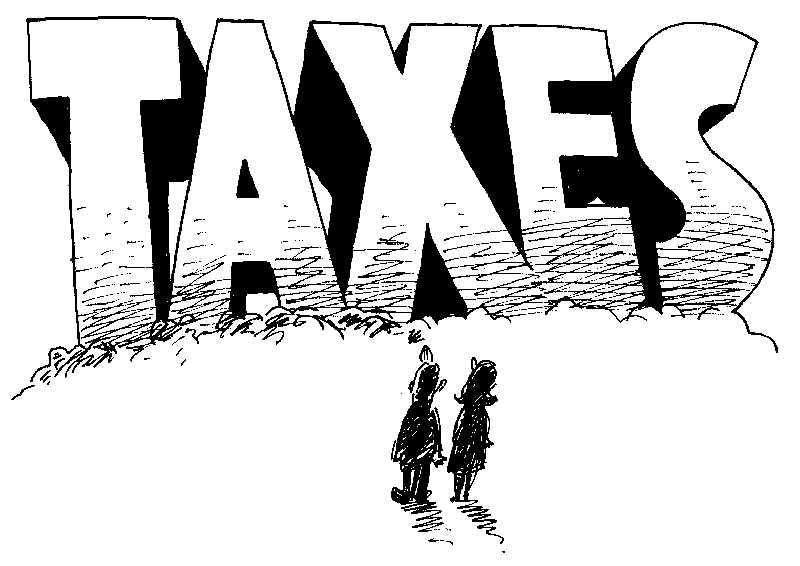
Recently, President Obama submitted a budget for 2013 that calls for an increase of government expenditures, not a reduction, with a projected deficit of close to a trillion dollars. It is clear beyond any doubt that Obama is opposed to solving the debt problem by reducing expenditures. So what is the alternative?
Obama seeks to create the belief that if the rich paid their "fair share," there wouldn't be a deficit problem.There is a case to be made that the wealthy are not paying their "fair share." Over a long period of time, with both Republican and Democratic political support, the tax rate schedule has been progressive, calling for the wealthy to pay a larger percentage of their income in income taxes than less wealthy taxpayers. But because of all sorts of provisions and loopholes that have been written into the tax code, tax payments by the wealthy fall well below what is called for by the tax rate schedule. Obama proposes to fix this by imposing a millionaires tax of 30% so that wealthy people pay their "fair share." It is estimated that this would bring in an additional $40 billion dollars a year in revenue. That still leaves $740 billion in increased expenditures.
Obama says his objective is to protect the middle class from an increase in taxes while addressing the deficit problem. He has proposed to decrease the deficit by allowing the Bush tax cuts enacted in 2001 and 2003 to expire, claiming that these tax cuts were tax cuts for the wealthy and violated the "fair share" principle. The IRS tax data shows that this claim is false. According to the IRS tax data for 2000 and 2004, the income taxes paid on the total AGI (Adjusted Gross Income) for all taxpayers fell from 15.26% in 2000 to 12.10% in 2004, a reduction of 21%. At the same time, the percentage of taxes paid on AGI by the top 1% of taxpayers only fell by 15%. So if the Bush tax laws are allowed to expire, the middle class will have their taxes raised more than the top 1% and the bulk of the increase in taxes will be paid by the middle class.
Since the total amount collected in federal income taxes in 2010 was approximately $900 billion dollars, an increase of 21% by canceling the Bush tax cuts would add an estimated $188 billion to federal revenue. Adding together $40 billion and $188 billion still leaves $552 billion in expenditures not covered by tax revenue. For political reasons (not to mention economic reasons) Obama isn't seeking an across the board increase in income tax rates to cover this deficit.
Well there is always a Value Added Tax (VAT) to be considered. In the European Union the VAT tax produces about 25% of the total tax revenue. Overwhelmingly, the middle class pays for this expenditure tax since the middle class spends a much higher fraction of its income for consumption than the upper 1%. Federal revenue in 2010 was 2.16 trillion dollars. A VAT tax designed to add revenue equal to 25% of this amount would provide $540 billion dollars covering the remaining deficit of $552 billion.
So the inevitable conclusion is that the increase in expenditures from 20% of GDP to 25% of GDP by Obama would have to be mostly paid for by the middle class. Trying to conceal this by class warfare in unconscionable.
____
Joseph Sternberg
Retired Professor of Physics
Naval Postgraduate School, Monterey, CA
A blog to explain the free-market, center-right point of view
to those who don't share this outlook.
Showing posts with label President Obama. Show all posts
Friday, March 16, 2012
Tuesday, January 17, 2012
A Variation on "I'm Right, You're Evil."
by Libby Sternberg
Civil policy discussions should be based on this simple premise, regardless of one's point of view:
That starting point means both parties respect each other, but they believe they have information and analyses that bolster their point of view...that their adversaries have not seen or, perhaps, understood in the same way.
That's the ideal, but we all know that it's hard to achieve. It's so tempting, at times, to suggest your debating adversary is not just wrong, but wrong because he or she is stupid (see Newsweek's latest cover) or....evil.
This "evil adversary" meme has taken a particularly distasteful turn ever since Barack Obama was elected president. In the past three years, those who disagree with the president have regularly been called racists. The incidents are so numerous, I won't bother to link to examples. Anyone who shares the center-right or conservative worldview can probably offer up dozens without much effort.
Now we have the latest entry in this narrative--a New York Times opinion piece by Lee Siegel describing Mitt Romney as the "whitest white man" to run for president in living memory.
After reading Siegel's piece, I knew precisely what he was up to--he's "telegraphing" to Times readers, otherwise unwilling to call their ideological opponents "evil," that they can be comfortable with labeling the president's adversaries as closet racists, and they should feel free to pour their ideological sympathy on those backward folks even while sadly recognizing the roots of their opposition. This point was made brilliantly in this New Republic rebuttal by John McWhorter. Here's a McWhorter snippet:
Like my fellow travelers, I've listened to this trope for three years now. It's the same old "I'm right, you're evil" line used for centuries by cowardly debaters. "I'm right, you're racist" is but a variation on that theme.
Rep. Allen West, himself an African-American Republican, has also weighed in, not specifically on the Siegel piece, but with a plea for the president and his handlers and supporters not to use unfounded racist claims in the coming election. Here's a link to his piece, and here's one of his best lines:
Good question, Allen. But I'm not holding my breath for a civil answer from the likes of Mr. Siegel.
-------
Libby Sternberg is a novelist.
Civil policy discussions should be based on this simple premise, regardless of one's point of view:
I'm right, and you're wrong.
That starting point means both parties respect each other, but they believe they have information and analyses that bolster their point of view...that their adversaries have not seen or, perhaps, understood in the same way.
That's the ideal, but we all know that it's hard to achieve. It's so tempting, at times, to suggest your debating adversary is not just wrong, but wrong because he or she is stupid (see Newsweek's latest cover) or....evil.
This "evil adversary" meme has taken a particularly distasteful turn ever since Barack Obama was elected president. In the past three years, those who disagree with the president have regularly been called racists. The incidents are so numerous, I won't bother to link to examples. Anyone who shares the center-right or conservative worldview can probably offer up dozens without much effort.
Now we have the latest entry in this narrative--a New York Times opinion piece by Lee Siegel describing Mitt Romney as the "whitest white man" to run for president in living memory.
After reading Siegel's piece, I knew precisely what he was up to--he's "telegraphing" to Times readers, otherwise unwilling to call their ideological opponents "evil," that they can be comfortable with labeling the president's adversaries as closet racists, and they should feel free to pour their ideological sympathy on those backward folks even while sadly recognizing the roots of their opposition. This point was made brilliantly in this New Republic rebuttal by John McWhorter. Here's a McWhorter snippet:
"...is Wonder-fully white Romney 'signaling' that he is 'not black'? There’s no case for that in any meaningful sense, other than to allow Siegel to flatter himself and his readers as sophisticated enough to be immune to the racism that is still 'out there.'”Despite gussying up his argument with supposedly thoughtful ponderings on how someone like Romney "telegraphs" to those dumb conservatives that he is not going to scare them like that dark-skinned fellow now occupying the Oval Office, Siegel is just doing some old-fashioned grade school name-calling. He should have skipped the philosophical posing and merely written "Your mother wears Army boots, you conservative hicks who oppose Obama."
Like my fellow travelers, I've listened to this trope for three years now. It's the same old "I'm right, you're evil" line used for centuries by cowardly debaters. "I'm right, you're racist" is but a variation on that theme.
Rep. Allen West, himself an African-American Republican, has also weighed in, not specifically on the Siegel piece, but with a plea for the president and his handlers and supporters not to use unfounded racist claims in the coming election. Here's a link to his piece, and here's one of his best lines:
"According to a Washington Post poll in September 2011, the proportion of black Americans with a 'strongly positive' view of President Obama has slipped from 83 percent to 58 percent. It would obviously be absurd to say the black community’s changing view of President Obama is racially biased, so how can one make the same claim about white members opposing his policies?"
Good question, Allen. But I'm not holding my breath for a civil answer from the likes of Mr. Siegel.
-------
Libby Sternberg is a novelist.
Wednesday, November 23, 2011
Huh?
by Leslie Lebl
I know that President Obama wants to shore up his base and that such a calculation probably contributed to his threat to veto any legislation undoing the defense cuts that resulted when the Super Committee failed to reach agreement. But does Obama really intend to use that position in next year's campaign?
I can see it now: "Vote for me if you want the U.S. military to undergo drastic cuts in wartime - cuts that even my defense secretary describes as devastating." And that will appeal to independents? Swing voters? Not so much is my guess.
Good-bye and Good Riddance
by Leslie Lebl
Well, thank heavens! The Super Committee just committed suicide, so we will no longer be subjected to ridiculous news stories about it. Who, aside from credulous newscasters and pundits, would ever have thought that 12 members of Congress, completely abandoned by a spendthrift president, would somehow make the difficult decisions on how to cut over $1 trillion? Especially when that same president had already ignored the conclusions of the bipartisan commission that he himself appointed?
So let's get real: such decisions are not meant to be made by 12 people meeting behind closed doors, but by the American public at large. And that exercise - known as "elections" - will take place next November. If in the meantime we receive another downgrade, there's no cause for surprise. After all, our national spending is out of control.
Friday, October 7, 2011
Checking the President's Presser,
and Another Great Response to Elizabeth Warren
by Libby Sternberg
As noted previously, the mainstream press is dominated by liberals, or at least by journalists sympathetic to liberal talking points. So it often surprises me when a major mainstream news source actually does render a dispassionate, nonpartisan take on a political story. Such is the case with the Associated Press, which offers a "fact check" of President Barack Obama's press conference yesterday in which he complained of Republican opposition to everything in his jobs bill and touted previous bipartisan support for ideas he's offering. Hint: both claims are not true. Read the full article here.
Back to Elizabeth Warren, who is trying to win the Democratic Senatorial primary in Massachusetts so she can challenge incumbent Republican Senator Scott Brown for the seat. Ms. Warren made a statement recently that flew around social media and leftwing blogs like, well, a viral post. The original statement can be found in this previous post (along with a parody of the remarks). To summarize: she believes no one in America achieves anything without the help of government-funded programs, which she calls the "social contract."
Conservative columnist George Will demolishes her argument in a very thoughtful, well-reasoned column here. My fave line: using a William F. Buckley quote, Mr. Will likens Ms. Warren to a "pyromaniac in a field of straw men."
As noted previously, the mainstream press is dominated by liberals, or at least by journalists sympathetic to liberal talking points. So it often surprises me when a major mainstream news source actually does render a dispassionate, nonpartisan take on a political story. Such is the case with the Associated Press, which offers a "fact check" of President Barack Obama's press conference yesterday in which he complained of Republican opposition to everything in his jobs bill and touted previous bipartisan support for ideas he's offering. Hint: both claims are not true. Read the full article here.
Back to Elizabeth Warren, who is trying to win the Democratic Senatorial primary in Massachusetts so she can challenge incumbent Republican Senator Scott Brown for the seat. Ms. Warren made a statement recently that flew around social media and leftwing blogs like, well, a viral post. The original statement can be found in this previous post (along with a parody of the remarks). To summarize: she believes no one in America achieves anything without the help of government-funded programs, which she calls the "social contract."
Conservative columnist George Will demolishes her argument in a very thoughtful, well-reasoned column here. My fave line: using a William F. Buckley quote, Mr. Will likens Ms. Warren to a "pyromaniac in a field of straw men."
Sunday, September 25, 2011
The Green Energy Illusion
by Joseph Sternberg
President Barack Obama repeatedly touts "green energy" as the way of the future. Billions are being spent to subsidize wind and solar power to replace the use of fossil fuels (and, by the way, enrich Al Gore). Obama repeatedly asserts that this is the way to solve the carbon dioxide problem caused by using fossil fuels and that we are moving in the right direction by subsidizing green energy. He implies that if all the countries did the same the level of CO2 in the atmosphere could be stabilized at an acceptable level.
This claim is false. How do we know that it is false? The reports of the Energy Information Administration (EIA), which is part of the Department of Energy, provide the answer. The EIA was set up years ago to provide independent data and analyses for all forms of energy and associated emissions, not only in the US but also in the world. They are the administration experts, have access to all of the administration's programs, and the information they develop is publicly available on the web. Of course, it has to be recognized that "forecasting is difficult, particularly about the future." But the forecasts of CO2 emissions by the EIA have to be substantially more reliable than forecasts about green energy provided by proponents of wind and solar power. The EIA forecasts are provided out to the year 2035.
Before looking at the EIA reports, three points need emphasis. The world's production of energy is increasing. As a consequence, the rate of worldwide emissions is increasing. The priority for both China and India, with 2.4 billions of the world's population, is economic development which means increasing power generation resulting in increased emissions. The Speaker of the House, Nancy Pelosi, took a delegation to China in an attempt to persuade them to sign on to the Cap and Trade program that the Democrats were pushing. The Cap and Trade program would be expected to decrease energy production, not increase it. The Chinese told her to get lost. Any approach to controlling emissions has to be an approach that can be embraced by China and India or it will fail.
The second point is that it is not sufficient to be just "moving in the right direction" as Obama is wont to say. This statement is irrelevant because it ignores the magnitude of reductions that must be achieved, and by when, in order to stabilize the level of atmospheric CO2. The level keeps increasing despite the fact that CO2 is continually being absorbed by the ocean which, in fact, eventually will absorb most of it. However, the absorption is a slow process taking hundreds of years. So before being absorbed in the ocean, the CO2 piles up in the atmosphere. All of this is not scientifically controversial.
Numerous studies have been conducted to determine how much decrease in emissions is required to stabilize the level of CO2 in the atmosphere. Such estimates are not precise, but they are not scientifically controversial. What do they say? The studies show that if the increase in emissions could be stopped by about 2035 and the level of emissions then decreased close to half by the end of the century, the atmospheric level of CO2 could be stabilized at 550 parts per million (ppm) by the next century. This is the goal set by the Intergovernmental Panel on Climate Change (IPCC) and would be double the atmospheric level of CO2 at the beginning of the industrial age.
The third point is that green energy is being pursued by many countries, including China and India, but green energy has inherent limitations. For example, consider the first proposed US offshore wind farm in Nantucket Sound. Because the wind doesn't choose to blow all the time, a representative wind farm will only produce about 30% of its rated capacity as compared with 90% of rated capacity currently being achieved by our nuclear plants. A wind farm delivering the same energy as a representative nuclear plant would cover an area of about 150 square miles. Wind energy requires a lot of area. As technology improves, green energy can be expected to have a place in future energy production. But what is the basis for asserting that green energy is ready to replace the use of fossil fuels? As we will see from the EIA data, there isn't any.
The largest contributor to emissions in the US is from the generation of electricity. Transportation is the second largest contributor. Nuclear reactors account for about 20% of electricity generation. The remainder of power plants use fossil fuels about equally divided between coal and natural gas. Renewables include biomass, hydropower, geothermal, wind, and solar. All together renewables provided about 10% of electricity generation in the US, about 2/3 of which has been provided by hydropower. The total of solar thermal, solar photovoltaic, and wind provided about 4% of electricity generation. The use of renewables is forecast by the EIA to increase between 2011 and 2035. But the bottom line is that US emissions are forecast to increase, not decrease, by perhaps 5%, between 2011 and 2035. The forecast increase in wind and solar power is not going to replace fossil fuels for electricity generation to any significant extent in the US.
What about China? China is energetically pursuing the expansion of solar and wind farm development. They also are pursuing an ambitious program of nuclear power, and plan to have 60 nuclear plants in operation by 2020. Despite all that, the EIA forecasts that emissions from China are expected to increase substantially between 2011 and 2035. At present emissions from China exceed those from the US. It is clear based on the estimates from the EIA that green energy in not going to stop the rise in emissions from China. Worldwide, estimates indicate a 35% increase in emissions.
Obama's green energy program is an illusion. The result is to spend billions wastefully instead of spending the money accelerating the development of technologies that could also be employed by both the developed and the developing nations to reduce atmospheric emissions.
It is important to recognize some of the scientific uncertainties about the effect of increasing atmospheric CO2. The IPCC concedes a possible variation of more than a factor of two in what the temperature rise might be due to increasing atmospheric CO2. This is due to scientific uncertainty about how the atmosphere works. Scientists are working on the problems, but there is little prospect that the uncertainty will be reduced anytime soon. Second, if you assume a particular global temperature increase, there is considerable controversy and uncertainty about what the climatic consequences would be, including a rise in the sea level. Computer models are used to make the predictions, but the computer models are unproven. The global climate is very complex. So you are in something of a quandary about global warming. The paleoclimatology data from a hundred of million years ago indicates that a several-fold increase in atmospheric CO2 goes along with a large increase in global temperature, even including the disappearance of the earth's ice caps. But the levels of atmospheric CO2 now being considered are smaller than the historical levels and so are not much help in reducing the uncertainty.
Second, global warming is not the only concern. The surface ocean is being acidified. This is chemistry and is not controversial. What is uncertain is the consequence for the world's food supply.The Interacademy Panel on international issues representing a global network of science academies has issued a statement (2009) on ocean acidification. According to their statement, the rapid increase of acidity of the world's oceans has "-- potentially profound consequences for marine plants and animals especially those that require calcium carbonate to grow and survive and other species that rely on these for food. Marine food supplies are likely to be reduced with significant implications for food production--". Not much about this appears in the press, which focuses on global warming.
The difficulty here is that if it is discovered that the effects of increased atmospheric CO2 are causing effects on the high side of the predictions, no one knows what to do about it then. As one might say, it would be too late.
The belief that green energy will provide a replacement for the use of fossil energy is an illusion. The billions that are being spent in subsidizing green power should instead be used to accelerate the development of technologies for carbon capture from fossil fuel plants. Where feasible, the substitution of natural gas for coal would help since for the same energy generated, natural gas emits half as much CO2 as coal. Coal is extensively used in China. Nuclear power can make a significant contribution. Limiting atmospheric CO2 must be accomplished in the face of a worldwide growth in energy production. China and India will not give up economic development.
____
Joseph Sternberg
Retired Professor of Physics
Naval Postgraduate School, Monterey, CA
President Barack Obama repeatedly touts "green energy" as the way of the future. Billions are being spent to subsidize wind and solar power to replace the use of fossil fuels (and, by the way, enrich Al Gore). Obama repeatedly asserts that this is the way to solve the carbon dioxide problem caused by using fossil fuels and that we are moving in the right direction by subsidizing green energy. He implies that if all the countries did the same the level of CO2 in the atmosphere could be stabilized at an acceptable level.
This claim is false. How do we know that it is false? The reports of the Energy Information Administration (EIA), which is part of the Department of Energy, provide the answer. The EIA was set up years ago to provide independent data and analyses for all forms of energy and associated emissions, not only in the US but also in the world. They are the administration experts, have access to all of the administration's programs, and the information they develop is publicly available on the web. Of course, it has to be recognized that "forecasting is difficult, particularly about the future." But the forecasts of CO2 emissions by the EIA have to be substantially more reliable than forecasts about green energy provided by proponents of wind and solar power. The EIA forecasts are provided out to the year 2035.
Before looking at the EIA reports, three points need emphasis. The world's production of energy is increasing. As a consequence, the rate of worldwide emissions is increasing. The priority for both China and India, with 2.4 billions of the world's population, is economic development which means increasing power generation resulting in increased emissions. The Speaker of the House, Nancy Pelosi, took a delegation to China in an attempt to persuade them to sign on to the Cap and Trade program that the Democrats were pushing. The Cap and Trade program would be expected to decrease energy production, not increase it. The Chinese told her to get lost. Any approach to controlling emissions has to be an approach that can be embraced by China and India or it will fail.
The second point is that it is not sufficient to be just "moving in the right direction" as Obama is wont to say. This statement is irrelevant because it ignores the magnitude of reductions that must be achieved, and by when, in order to stabilize the level of atmospheric CO2. The level keeps increasing despite the fact that CO2 is continually being absorbed by the ocean which, in fact, eventually will absorb most of it. However, the absorption is a slow process taking hundreds of years. So before being absorbed in the ocean, the CO2 piles up in the atmosphere. All of this is not scientifically controversial.Numerous studies have been conducted to determine how much decrease in emissions is required to stabilize the level of CO2 in the atmosphere. Such estimates are not precise, but they are not scientifically controversial. What do they say? The studies show that if the increase in emissions could be stopped by about 2035 and the level of emissions then decreased close to half by the end of the century, the atmospheric level of CO2 could be stabilized at 550 parts per million (ppm) by the next century. This is the goal set by the Intergovernmental Panel on Climate Change (IPCC) and would be double the atmospheric level of CO2 at the beginning of the industrial age.
The third point is that green energy is being pursued by many countries, including China and India, but green energy has inherent limitations. For example, consider the first proposed US offshore wind farm in Nantucket Sound. Because the wind doesn't choose to blow all the time, a representative wind farm will only produce about 30% of its rated capacity as compared with 90% of rated capacity currently being achieved by our nuclear plants. A wind farm delivering the same energy as a representative nuclear plant would cover an area of about 150 square miles. Wind energy requires a lot of area. As technology improves, green energy can be expected to have a place in future energy production. But what is the basis for asserting that green energy is ready to replace the use of fossil fuels? As we will see from the EIA data, there isn't any.
The largest contributor to emissions in the US is from the generation of electricity. Transportation is the second largest contributor. Nuclear reactors account for about 20% of electricity generation. The remainder of power plants use fossil fuels about equally divided between coal and natural gas. Renewables include biomass, hydropower, geothermal, wind, and solar. All together renewables provided about 10% of electricity generation in the US, about 2/3 of which has been provided by hydropower. The total of solar thermal, solar photovoltaic, and wind provided about 4% of electricity generation. The use of renewables is forecast by the EIA to increase between 2011 and 2035. But the bottom line is that US emissions are forecast to increase, not decrease, by perhaps 5%, between 2011 and 2035. The forecast increase in wind and solar power is not going to replace fossil fuels for electricity generation to any significant extent in the US.
What about China? China is energetically pursuing the expansion of solar and wind farm development. They also are pursuing an ambitious program of nuclear power, and plan to have 60 nuclear plants in operation by 2020. Despite all that, the EIA forecasts that emissions from China are expected to increase substantially between 2011 and 2035. At present emissions from China exceed those from the US. It is clear based on the estimates from the EIA that green energy in not going to stop the rise in emissions from China. Worldwide, estimates indicate a 35% increase in emissions.
Obama's green energy program is an illusion. The result is to spend billions wastefully instead of spending the money accelerating the development of technologies that could also be employed by both the developed and the developing nations to reduce atmospheric emissions.
It is important to recognize some of the scientific uncertainties about the effect of increasing atmospheric CO2. The IPCC concedes a possible variation of more than a factor of two in what the temperature rise might be due to increasing atmospheric CO2. This is due to scientific uncertainty about how the atmosphere works. Scientists are working on the problems, but there is little prospect that the uncertainty will be reduced anytime soon. Second, if you assume a particular global temperature increase, there is considerable controversy and uncertainty about what the climatic consequences would be, including a rise in the sea level. Computer models are used to make the predictions, but the computer models are unproven. The global climate is very complex. So you are in something of a quandary about global warming. The paleoclimatology data from a hundred of million years ago indicates that a several-fold increase in atmospheric CO2 goes along with a large increase in global temperature, even including the disappearance of the earth's ice caps. But the levels of atmospheric CO2 now being considered are smaller than the historical levels and so are not much help in reducing the uncertainty.
Second, global warming is not the only concern. The surface ocean is being acidified. This is chemistry and is not controversial. What is uncertain is the consequence for the world's food supply.The Interacademy Panel on international issues representing a global network of science academies has issued a statement (2009) on ocean acidification. According to their statement, the rapid increase of acidity of the world's oceans has "-- potentially profound consequences for marine plants and animals especially those that require calcium carbonate to grow and survive and other species that rely on these for food. Marine food supplies are likely to be reduced with significant implications for food production--". Not much about this appears in the press, which focuses on global warming.
The difficulty here is that if it is discovered that the effects of increased atmospheric CO2 are causing effects on the high side of the predictions, no one knows what to do about it then. As one might say, it would be too late.
The belief that green energy will provide a replacement for the use of fossil energy is an illusion. The billions that are being spent in subsidizing green power should instead be used to accelerate the development of technologies for carbon capture from fossil fuel plants. Where feasible, the substitution of natural gas for coal would help since for the same energy generated, natural gas emits half as much CO2 as coal. Coal is extensively used in China. Nuclear power can make a significant contribution. Limiting atmospheric CO2 must be accomplished in the face of a worldwide growth in energy production. China and India will not give up economic development.
____
Joseph Sternberg
Retired Professor of Physics
Naval Postgraduate School, Monterey, CA
Saturday, August 27, 2011
So You'd Like to Create a Tea Party?
By Leslie S. Lebl
Last Thursday Richard Trumka, president of the AFL-CIO, told reporters that organized labor will reduce its funding of Democratic party coffers and instead build up its own grassroots structure. This structure, which sounds a lot like the Tea Party, would pressure candidates to honor promises made during the campaign.
So what would such an organization look like and how might it function? Would it be able to duplicate the Tea Party's success in shaping decisions in Washington? First of all, the similarities:
-- The Tea Party grew out of frustration with both parties. The unions are clearly very frustrated with President Obama and Congressional Democrats. Despite spending over $400 million to help elect Obama, unions were disappointed when the president failed to deliver such things as the card check bill that would facilitate union organizing. And the president is reportedly about to submit three free trade agreements for congressional approval that the unions oppose. (The unions apparently don't give much weight to the passage of ObamaCare.) More importantly, as Trumka puts it, Obama has allowed the Republicans to shift the terms of debate to debt and deficit reduction - definitely not union priorities.
-- In 2010, money that Republican party organizations might have hoped to get went instead to Tea Party groups, and that's likely to happen again in 2012. But in the end, most of it supported Republican candidates.
-- It's hard to think of the unions not supporting Democratic candidates next year, in the final analysis. Like the Tea Party, they're likely to conclude that you're more likely to get what you want by working within the two-party system, rather than outside it.
The differences, though, are more numerous:
-- The Tea Party was a genuine grassroots movement; it wasn't organized top-down, although senior Republican politicians have since taken key Tea Party positions. I'd be very surprised if that's what Trumka is talking about; I suspect he's got "astroturf" -- a movement directed by professionals -- in mind instead.
-- Fairly early on, the Tea Party decided its priorities were reducing government deficits and debt, shrinking the size of government, and strengthening America's foreign and national security policy. Social issues had to take a back seat. But any real grassroots labor group may find such unity elusive.
-- First of all, unions have never controlled the actual votes of their members. Significant minorities have always voted Republican, and there haven't been any reports suggesting that this situation will change. That being the case, grassroots positions on the unions' political agenda are also likely to be split.
-- Second, Trumka said that his members were "working-class people ... looking for three things: jobs, jobs, jobs." But organized labor consists of two different groups: private sector unions, who now represent no more than 6-7 percent of private sector workers; and public sector unions, now including almost one-third of state and local employees. By now, the former have surely realized that stimulus spending doesn't help them; the latter will continue to press for such spending to preserve public sector jobs.
-- Third, new laws in several states no longer require all public employees to pay union dues, so organized labor may find itself with less money in its coffers than before. No matter what, this will translate as decreased influence - hardly an encouraging development. The Tea Party, on the other hand, started from zero so had the encouragement of an upward trend in money available to spend on key issues and on political campaigns.
-- It's also easier to get out activists and voters if you feel like you're on a roll. Unions are famous for their ability to turn out the demonstrators and voters, but that may not be so easy if there's less money to fund those people.
-- And there's one final problem: everything the unions want costs money. Already, unions in many states are battling the public perception that it is their extravagant costs that are running up state and local budget deficits. The Tea Party, on the other hand, is arguing for less spending. That may be unpopular in many quarters, and politically extremely difficult, but at least they're not demanding more resources when the coffers are empty.
So will Trumka find a way to energize his base and build a new organization capable of exerting significant pressure on Obama and Congressional Democrats? It seems unlikely - and he runs the risk that withholding union funding from the Democratic Party will contribute to its defeat in November 2012.
Tuesday, August 9, 2011
Forget the Frontrunner
I'm so tired of listening to pundits decry the lack of a credible Republican presidential candidate that I feel moved to proclaim the exact opposite. I think it's a very good thing that we don't have a frontrunner on whom all Republican hopes are pinned, for two reasons.
First, right now the Republican platform is in flux, as shown by how House Speaker John Boehner's position on "revenue increases" changed during the debt ceiling negotiations. At first, he obviously thought he had to give President Obama some kind of concession. Then he discovered that he could get the deal without one. Obama may think the fall "supercommission" will produce significant tax increases, although I doubt it. But imagine if, as the Republican nominee, you had to offer an opinion - without being at the negotiating table. The perils are extreme: if you say some kind of increase is okay, you look like a wimp if Obama caves. If you refuse to consider any hikes and the package includes tax reform that may involve some increases, you're toast. And if you refuse to say anything, you get painted as a coward -- just ask Mitt Romney, the current leader of the pack.
Second, and conversely, choosing a front-runner for Republican nominee could hurt the evolution of the Republican platform. Just think if criticism of ObamaCare had to be tailored to avoid criticizing RomneyCare. Or if concessions made to Michele Bachmann alienated too many independents.
The truth is that the current configuration has its advantages. Boehner and Senator Minority Leader Mitch McConnell lead the charge for spending cuts, debt reduction -- and bipartisan compromise. They may win fame and glory but, if recent opinion polls are any indication, opprobrium is more likely. However, they can at least do what they see as necessary without worrying about how this will affect their presidential campaign, as neither is running. And the future Republican nominee, whoever s/he is, will profit from any progress they achieve.Yes, I know: President Obama is out there raising lots of money that no Republican can match. That probably won't change. But if Republican congressional leaders can build consensus among Republicans and independents for real fiscal reform, that may make all the difference.
Monday, August 8, 2011
Chris Matthews as Mr. McGuire
by Libby Sternberg
As mentioned previously, I watch a lot of MSNBC. In fact, I have it on right now. Not liking that color green on you, Mika.
Watching so much of this network means I get to see their own promotional ads a great deal, and they often have me scratching my head wondering why their marketing gurus thought these would be effective enticements to watch their shows.
All the MSNBC promo ads feature their marquee hosts talking about a political or policy topic, ostensibly to demonstrate to the audience the level of discourse you'll find on the various shows, the thoughtful exploration of issues, albeit from a liberal point of view.
The problem is that each ad seems to communicate just the opposite to me. Instead of thoughtfulness, the ads telegraph simplistic misunderstanding of their opponents, and some of the ads, in fact, contain an implicit criticism of those who might disagree with their point of view.
Take the Lawrence O'Donnell spot, for example, which has him talking about immigration, telling viewers that if they understand how "this country was built on immigration," they'll understand the "added value" immigrants bring. He ends by saying something about how if we "close the door," we change who we are.
But who ever said we should close the door on legal immigration? Most of the debates and policy suggestions I've seen have focused on illegal immigration. Nice job, Larry. You insult your audience by ascribing unfair attitudes to them, that they dislike all immigrants.
Then there are Rachel Maddow's spots, which lately have featured her talking about America's past investments and its legacy or....something. My favorite is the one with her in front of the Hoover Dam gushing about how a country, not local towns and states, has to build such mammoth projects. Get with the program, people, she seems to be saying. You've given up on American greatness.
But does anyone seriously believe she would have supported something like the Hoover Dam's construction, a project that probably had profound environmental impact on the area? I don't know about you, but I envision Rachel M in the front lines of protest groups trying to block that kind of big project today.
My favorite spot, however, belongs to Chris Matthews. He sits on an unidentified Washington rooftop with the White House and Washington Monument in the background, his right hand in his pocket, conveying a sort of avuncular congeniality (the exact opposite of the approach he takes on his show, Hardball -- I mean, c'mon, just read the title of the program and you catch its gestalt).
Matthews talks about President Obama's distinctive background and how those who criticize him for being un-American...or something...are wrong because the president is a living, breathing example of "American exceptionalism." (It's hard to find this ad on youtube, by the way.) At the end of this ramble, Matthews pauses for a beat, then looks at the camera and says with thrill-up-the-leg sincerity: "American exceptionalism" as if those of us who disagree with the president obviously don't get how darn special he is.
Let's leave aside for the moment whether it's wise to use that phrase ("American exceptionalism") to describe Obama, who rejected it as a singular description of his own country in an interview a couple years ago, saying he believes in American exceptionalism, but he suspects the Brits "believe in British exceptionalism and the Greeks...in Greek exceptionalism" (and yes, I'm aware of the arguments from those who think this quote was taken out of context, but unless he goes on to say, "scratch that, what I really meant was..." I'm not sure you can airbrush it out).
Let's instead focus on the chuckle this little bit of theater produces whenever I see Matthews utter those words.
When Matthews pauses, then says "American exceptionalism," I can't stop myself from thinking of Mr. McGuire's exchange with Dustin Hoffman's Ben Braddock character in The Graduate:
Every single time I hear Chris Matthews smugly say "American exceptionalism" to describe President Obama, I'm sorry, I think of Mr. McGuire smugly saying "plastics" to the bewildered Benjamin Braddock.
McGuire completely misreads Ben Braddock, whose thoughts and worries are focused on what to do with himself now that he has graduated. Ben knows there are jobs out there, in plastics or elsewhere. He wants more than a job. He wants a life.
Similarly, Americans know President Obama has a great backstory, an inspirational tale of humble beginnings leading to great accomplishments. I venture to say that story makes most Americans extremely proud and happy. They get American exceptionalism. They embrace it.
But most Americans aren't focused on that right now. They're focused on jobs and an economy that will allow them to lead comfortable as well as meaningful lives.
It's all well and good that their president is a shining example of how anyone in American can rise to the top. They just want to stay afloat.
As mentioned previously, I watch a lot of MSNBC. In fact, I have it on right now. Not liking that color green on you, Mika.
Watching so much of this network means I get to see their own promotional ads a great deal, and they often have me scratching my head wondering why their marketing gurus thought these would be effective enticements to watch their shows.
All the MSNBC promo ads feature their marquee hosts talking about a political or policy topic, ostensibly to demonstrate to the audience the level of discourse you'll find on the various shows, the thoughtful exploration of issues, albeit from a liberal point of view.
The problem is that each ad seems to communicate just the opposite to me. Instead of thoughtfulness, the ads telegraph simplistic misunderstanding of their opponents, and some of the ads, in fact, contain an implicit criticism of those who might disagree with their point of view.
Take the Lawrence O'Donnell spot, for example, which has him talking about immigration, telling viewers that if they understand how "this country was built on immigration," they'll understand the "added value" immigrants bring. He ends by saying something about how if we "close the door," we change who we are.
But who ever said we should close the door on legal immigration? Most of the debates and policy suggestions I've seen have focused on illegal immigration. Nice job, Larry. You insult your audience by ascribing unfair attitudes to them, that they dislike all immigrants.
Then there are Rachel Maddow's spots, which lately have featured her talking about America's past investments and its legacy or....something. My favorite is the one with her in front of the Hoover Dam gushing about how a country, not local towns and states, has to build such mammoth projects. Get with the program, people, she seems to be saying. You've given up on American greatness.
But does anyone seriously believe she would have supported something like the Hoover Dam's construction, a project that probably had profound environmental impact on the area? I don't know about you, but I envision Rachel M in the front lines of protest groups trying to block that kind of big project today.
My favorite spot, however, belongs to Chris Matthews. He sits on an unidentified Washington rooftop with the White House and Washington Monument in the background, his right hand in his pocket, conveying a sort of avuncular congeniality (the exact opposite of the approach he takes on his show, Hardball -- I mean, c'mon, just read the title of the program and you catch its gestalt).
![]() |
| "Plastics" |
Let's leave aside for the moment whether it's wise to use that phrase ("American exceptionalism") to describe Obama, who rejected it as a singular description of his own country in an interview a couple years ago, saying he believes in American exceptionalism, but he suspects the Brits "believe in British exceptionalism and the Greeks...in Greek exceptionalism" (and yes, I'm aware of the arguments from those who think this quote was taken out of context, but unless he goes on to say, "scratch that, what I really meant was..." I'm not sure you can airbrush it out).
Let's instead focus on the chuckle this little bit of theater produces whenever I see Matthews utter those words.
When Matthews pauses, then says "American exceptionalism," I can't stop myself from thinking of Mr. McGuire's exchange with Dustin Hoffman's Ben Braddock character in The Graduate:
Mr. McGuire: I just want to say one word to you. Just one word.
Ben: Yes, sir.
Mr. McGuire: Are you listening?
Ben: Yes, I am
Mr. McGuire: Plastics.
Every single time I hear Chris Matthews smugly say "American exceptionalism" to describe President Obama, I'm sorry, I think of Mr. McGuire smugly saying "plastics" to the bewildered Benjamin Braddock.
McGuire completely misreads Ben Braddock, whose thoughts and worries are focused on what to do with himself now that he has graduated. Ben knows there are jobs out there, in plastics or elsewhere. He wants more than a job. He wants a life.
Similarly, Americans know President Obama has a great backstory, an inspirational tale of humble beginnings leading to great accomplishments. I venture to say that story makes most Americans extremely proud and happy. They get American exceptionalism. They embrace it.
But most Americans aren't focused on that right now. They're focused on jobs and an economy that will allow them to lead comfortable as well as meaningful lives.
It's all well and good that their president is a shining example of how anyone in American can rise to the top. They just want to stay afloat.
Subscribe to:
Posts (Atom)


